Showing posts with label Adams. Show all posts

Sunday, September 21, 2014

L'ÉQUIPONDÉRATEUR

AM | @HDI1780

"Le grand moment de l'idée" — Marcel Gauchet

I am an avowed fan of political checks and balances and the related notions of mixed government, balanced government and the separation of powers. In 1787, just as the political temperature was rising to dangerous levels in North America, the Netherlands and France, John Adams famously described the English constitution as...

...the most stupendious fabric of human invention. And that the Americans ought to be applauded instead of censured, for imitating it as far as they have done. Not the formation of languages, not the whole art of navigation and ship-building does more honour to the human understanding than this system of government [1].

In La Révolution des pouvoirs, Marcel Gauchet devotes an entire chapter to the stunning comeback of the idea of political équilibre after Thermidor [2]. But students of the period are handicapped by the lack of digitized material. For example, Google Books does not have a digitized version of the book published in the spring of 1795 by Pierre-Bernard Lamare (or La Mare) under the imposing title L'Équipondérateur, ou une seule manière d'organiser un gouvernement libre (Paris: An III). I can't find it in Gallica either. Until we get that version, many of us will have to rely on Mr. Gauchet's extremely useful remarks and quotes.

* * *

There is some debate about the role of Lamare as the translator of Adams's Defence, published by Buisson in 1792 in two volumes as Défense des constitutions américaines ou De la nécessité d'une balance dans les pouvoirs d'un gouvernement libre (1, 2). According to Dictionnaire historique, critique et bibliographique (1810), L'Équipondérateur "fut envoyé dans tous les départements par ordre du gouvernement" [see]. The book contains a sharp critique of the French constitutions of 1791 and 1793:

Aucun de ces plans ne représente une sage combinaison des principaux pouvoirs de gouvernement ; je n'y vois aucune de ces balances, limitations ou oppositions connues et admirées dans d'autres constitutions et dont l'effet est de préserver une nation de toutes dispositions arbitraires de la part de ceux qui la gouvernent, de toute violation de ses droits tant individuels que politiques et de lui assurer, quoi qu'il puisse arriver, qu'il ne sera fait pour elle que des lois justes et que ces lois seront exécutées impartialement. En un mot, aucune de ces constitutions n'est équilibrée, et voilà pourquoi je les blâme toutes.

In his discussion of the relevance or irrelevance of mixed government in the age of revolutions, Mr. Gauchet quotes Gordon Wood's critique of John Adams. That critique was effectively answered by C. Bradley Thompson in his book John Adams & the Spirit of Liberty (University Press of Kansas, 1998). But here's the point I want to make about L'Équipondérateur. Lamare understood the importance of a single executive (l'unité du magistrat); but because public opinion was so strongly opposed to this idea, he settled for an executive made up of two consuls, "titre éclatant, imposant et républicain."

Even writers who were courageous enough to defend the notion of political balance, like Pierre-Bernard Lamare, bumped against the wall of a strong and unified executive power. That would prove to be the fatal weakness of the Constitution of 1795. Two conclusions come to mind. On the one hand, we need to know more about Lamare and his fellow supporters of équilibre, a group that has been excluded from the canons of historical scholarship. On the other hand, we would do well to reconsider the meaning of Raynal's intervention at Assemblée Nationale in May 1791; far from representing a despicable surrender of the principles defended by philosophes (the consensus view), it was a noble and courageous affirmation of ... good government.

[1] John Adams. A Defence of the Constitutions of the United States, Vol. 1, letter xx: "England".

[2] Marcel Gauchet. La Révolution des pouvoirs. La souveraineté, le peuple et la représentation 1789-1799. Paris: Gallimard, 1995.
______________

Thursday, October 10, 2013

WITHOUT TUMULT

AM | @HDI1780

"... without tumult and faction ..." — David Hume

Search engines allow us to better understand what Condorcet called "révolutions du langage" in the Eighteenth century [see]. As it turns out, hundreds of turns of phrase, expressions and words circulated widely among writers. To the extent that we can trace their origins, they provide interesting clues to the reading (and writing) habits of some of the most important authors. Mariano Moreno refers to Thomas Jefferson in the following terms: "Oigamos á M. Jefferson ... este juicioso escritor" (Gazeta de Buenos-Ayres, November 28, 1810).

This is taken from Raynal, as he mentions Montesquieu: « Aucun des auditeurs ne soupçonna les véritables vues d’un écrivain si judicieux ...» (HDI 1780, xiv.22). The Frenchman, in turn, derived the expression from David Hume: "Arrian, a very grave, judicious writer ..." ("Of the rise and progress of the arts and sciences", 1742, note 38). Hume also inspired James Madison: "It had been observed by judicious writers ..." (Debates in the Federal Convention, 1787). Did Hume take it from John Locke? Quite possibly: "We are mightily beholding to judicious writers of all ages..." [see]. And so on.

* * *

Some of these expressions were quite irrelevant. But that was not always the case. The phrase secrecy and dispatch played a major role in the 1787-88 American constitutional debates; it "travelled" from translations of Polybius to Encyclopédie, and from there to Jean-Louis de Lolme's The Constitution of England, before "landing" in John Adams' pamphlet "Thoughts on Government" and in the 1780 edition of Histoire des deux Indes (1, 2, 3). The best authors knew their Greek and Roman sources well. They read each other's books. They were aware of the importance of éloquence to a degree that we find difficult to understand in 2013.

Another fascinanting expression is without tumult. Its importance derives from the fact that it describes the political culture of republicanism. Political power must be transferred peacefully —without tumult— in order for republicanism to thrive. This happened in the United States with the election of 1800 — but it was a close call. The French would not manage to achieve such a result for decades, to say nothing of the South Americans ...

Here's a tentative "history" of that phrase. My take-away: there was no such thing as a purely Italian, French, German, English, American or Spanish political culture. It was mostly an Atlantic political culture, with strong roots in the classical world.

- Livy: "... ita pedites equitibus cum leui armatura ante aciem hosti oppositis sine tumultu abducti ...", Book XLIV.33 [see].

- Plutarch (Amyot's translation) : « ... avec si peu de maulx, et sans tumulte, trouble, ne sedition quelconque ...», Vie des hommes illustres [see].

- Niccolò Machiavelli: "... gli venivano senza tumulto e senza violenza ...", Discorsi, I [see].


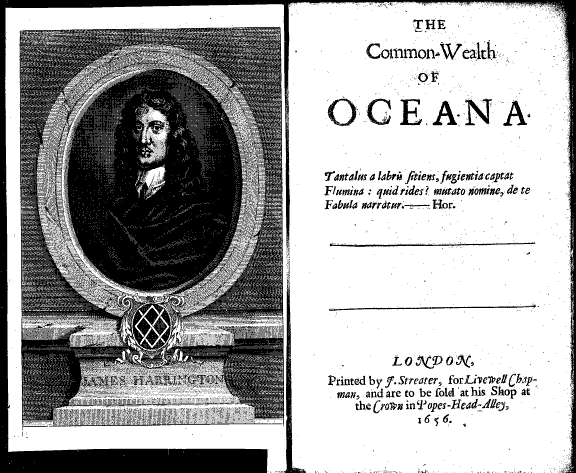
- James Harrington: "... the Jews could not dispute with the Christians without Tumult", Oceana, 1656, p. 338 [see].

- Histoire Universelle :  « ... un pareil changement ne pouvoit se faire sans tumulte ...», Histoire des Lacédémoniens. Amsterdam, 1743, p. 674 [see].

 - David Hume: "... a republican government ... steady and uniform, without tumult and faction" ("Idea of a Perfect Commonwealth", 1752)

- Baron d'Holbach : « ... & pour se faire entendre sans tumulte ...», REPRÉSENTANS, (Droit politiq. hist. mod.). See also: « Comme la société, surtout quand elle est nombreuse, ne pourrait que très-difficilement s'assembler, & sans tumulte faire connoitre ses intentions, elle est obligée de choisir des citoyens à qui elle accorde sa confiance ...», Système de la nature,  i.9. Londres, 1781, p. 221; « ... sans tumulte, elle [la Société] réprimeroit alors des Chefs devenus injustes ...», Politique naturelle, ou discours sur les vrais principes du gouvernement, I.ii.19, Londres, 1773, p. 114.

- Cesare Beccaria: "... un judizio non tumultuario ed interessato, ma stabile e regolare ...", Dei delitti e delle pene, 1764 [see].

- George Washington: "... a Constitutional door is open for amendments and may be adopted in a peaceable maner without tumult or disorder". Washington to Charles Carter, 14 December 1787 [see].

- Condorcet: « ... des élections libres, sans tumulte, dont la forme soit sagement combinée. », Sur les assemblé
es provinciales, 1788 [see].

- Friedrich Schiller: "Er fehlte darinn sehr, daß er das Volk nicht durch Repräsentanten sondern in Person entscheiden ließ, welches wegen der starken Menschenmenge nicht ohne Verwirrung und Tumult und wegen der überlegenen Anzahl der unbemittelten Bürger nicht immer ohne Bestechung abgehen konnte", Die Gesetzgebung des Lykurgus und Solon, 1789 [see] (*).


- John Adams: "... the pleasure of exchanging Presidents without tumult ...", to Abigail, 9 March 1797 [see].

- Mariano Moreno: "...el espectáculo de un pueblo que elige sin tumultos ...", Gazeta de Buenos-Ayres, June 1810.


(*) This idea comes straight from d'Holbach! See Ulrich Rommelfanger (1987): "Der Verdienst, in bemerkenswert klaren und knappen Sätzen den Zweck des Repräsentativsystems umirssen zu haben, kommt im 18. Jahrhundert Baron d'Holbach zu".
______________

Sunday, September 15, 2013

RUTLAND


« ...au défaut d’équilibre entre les différentes autorités » — De Jaucourt

AM | @HDI1780

RUTLAND est un article étonnant. Cette « province méditerranée d’Angleterre, dans le diocese de Peterborough » fournit au Chevalier de Jaucourt l'excuse d'une intéressante biographie intellectuelle de James Harrington (1611-1677), l'auteur de Oceana, texte suivi de près par ceux qui s'intéressent à l'histoire du gouvernement mixte et de l'équilibre des pouvoirs. « Je me suis étendu contre ma coutume, sur cet ouvrage profond, parce qu’il est peu ou point connu des étrangers », annonce de Jaucourt. Excellente idée !

* * *

De Jaucourt mentionne  « le recueil de tous les ouvrages de ce beau génie, paru à Londres en 1737, in-folio ; sur quoi, voyez biblioth. Britan. tom. IX. part. II. art. 10. » Il s'agit vraisemblablement de l'édition de John Toland, publiée en 1737, reproduite par Google Books [voir]. John Adams était un fervent lecteur de Harrington ; c'est dans l'Oceana qu'il puisera la fameuse expression "an empire of laws, and not of men." (1, 2). La brève synthèse du chevalier de Jaucourt est particulièrement utile, puisqu'elle renvoie à deux idées importantes de l'Histoire des deux Indes (*):

[1] Il n'y a pas de despotisme éclairé. « Il soutenoit que tant que la balance demeureroit inégale, il n’y a pas de prince qui pût être hors d’atteinte (quelqu’attentif qu’il fût à se rendre agréable au peuple), & que quoiqu’un bon roi pût ménager passablement les choses pendant sa vie, cela ne prouvoit point que le gouvernement fût bon, puisque sous un prince moins prudent, l’état ne pourroit manquer de tomber en desordre ; au lieu que dans un état bien réglé, les méchans deviennent gens de bien, & les fous se conduisent sagement. » Ceci ressemble assez à HDI 1780, xix.2, paragraphe 27.

[2] Il n'y pas d'autorité sans propriété. « Il est le premier qui ait prouvé que l’autorité suit la propriété, soit qu’elle réside entre les mains d’un seul, d’un petit nombre, ou de plusieurs ». Voici HDI 1780, xix.2, paragraphe 56 :  « ...la souveraineté illimitée ne peut avoir des sujets, parce qu’elle ne peut avoir des propriétaires; qu’on ne commande qu’à ceux qui ont quelque chose, & que l’autorité cesse sur ceux qui ne possèdent rien...» (texte de Diderot). 

(*) La pensée politique de James Harrington est également étudiée dans le contexte de l'interaction entre les sciences naturelles et les sciences sociales, thème cher à Diderot. Voir I. Bernard Cohen. Interactions between the natural sciences and the natural sciences. MIT Press, 1994.
______________

Friday, July 26, 2013

ADAMS TO RAYNAL, JANUARY 5, 1782

AM | @HDI1780

John Adams writes to Guillaume-Thomas Raynal from Amsterdam in early 1782. Raynal is already in his Belgian exile. (I am reproducing the text and footnotes from the magnificent online collection of the Massachusetts Historical Society).  After Yorktown, the tone had changed with respect to Histoire des deux Indes: American revolutionaries were casting a critical eye over many passages written by Raynal on North America in Book XVIII. Paine, Mazzei, Washington and Jefferson would soon follow in Adams' footsteps.

* * *

Note the use of the word "pathetic", which corresponds to the more inspiring French pathétique [see]. Among the founders of the new republic, Histoire des deux Indes only mentions five men: "Hancok (sic), Franklin, les deux Adams furent les plus grands acteurs dans cette scène intéressante: mais ils ne furent pas les seuls" (xviii.45); a little later we read about "Leur chef, Wasington (sic)" (xviii.46). This may have infuriated Thomas Jefferson, because the mentions come just before the translation of the Declaration of Independence, with no reference to its main author [see]. Here's a link to Staatsomwenteling van Amerika, the Dutch translation mentioned in the letter.

To the Abbé Raynal
Author: JA
Recipient: Raynal, Guillaume Thomas François, Abbé
Date: 1782-01-05

Amsterdam January 5. 1782

Dr Sir

I have the Honour to transmit you, the Revolution of America, translated into the Sublimest Language of Europe, if we are to believe the People of the Netherlands, who alone understand it. The Compliment paid to four Characters among whom I am Supposed to be one in this History, no doubt induced the Editor to dedicate it {p. 172} to me: be this however as it may, I would not exchange the Small Share which belongs to me in that pathetic Testimony from So distinguished a Friend of Truth, Liberty and Humanity, for a Statue of Bronze or Marble to be erected in honour of me, by the first Monark of the World in the Market street of Philadelphia.1

I am however, very unhappy to find so many Mistakes in Point of Fact, because coming from so great an authority they will be taken for certain, and have an ill Effect.2

My Friend Edmund Jennings Esqr, a Gentleman whose Principles Sentiments and Disposition I think will be agreable to you, will have the Honour to deliver you this Letter.3 He resides at Brussells, and is very agreable Company.

LbC Adams Papers.

1. Abbé Guillaume Thomas François Raynal, Staatsomwenteling van Amerika. Uit het Fransch, Amsterdam, 1781. Two copies are among JA’s books at MB ( Catalogue of JA’s Library ). For the various printings and translations of Raynal’s work, see vol. 10:405. The dedication reads, “Zyner excellentie John Adams schildknaap gevolmagtigden staatsdienaar der vereenigde staaten van Amerika, edelmoedigen bevorderaar van de onafhanklykheid dier volkplantingen, wordt dit werk onderdaanigst opgedraagen, door zyner excellentie’s Zeer eebiedigenden Dienaar willem holtrop.” Translation: To his Excellency, John Adams Esqr., plenipotentiary officer of the United States of America, noble proponent of the independence of those colonies, this work is most humbly dedicated, by his Excellency’s very respectful servant Willem Holtrop. Raynal’s attribution of the leading roles in the adoption of the Declaration of Independence to John Hancock, Benjamin Franklin, and the two Adamses appeared on p. 76 of the Dutch edition.

2. See On the Abbé Raynal’s Révolution de l’Amérique, 22 Jan., below.

3. JA enclosed this letter in one to Jenings that has not been found (from Raynal, 18 Jan., below).
______________

Friday, July 19, 2013

IT'S JOHN ADAMS!

AM | @HDI1780

"... secresy and dispatch... — George Washington

Time to drastically downgrade my claims about the precedence of Histoire des deux Indes as the source of the phrase secrecy and dispatch, widely used in America in the context of the executive power. I had forgotten to include John Adams's wonderful pamphlet "Thoughts on Government" (April 1776): "A representative assembly, although extremely well qualified, and absolutely necessary, as a branch of the legislative, is unfit to exercise the executive power, for want of two essential properties, secrecy and despatch."

Sorry about that! (Still, it's two steps forward, one step back).

* * *

Yet I remain confident about another claim: it was Diderot who first used these magic words in the context of the executive power [see]. Adams, a keen reader of Polybius, Encyclopédie and De Lolme, might have taken them from the English translation of The Constitution of England, and transmitted the idea back to Raynal in 1779. If this was indeed the case, then Raynal (and not Diderot) is the likely author of the changes introduced in the 1780 edition of HDI with respect to the government of England. (These passages do not feature in Laurent Versini's edition of Œuvres, Tome III).

Confusing? Sure. But the confusion only underlines the validity of another of my claims: ideas and rhetorical expressions circulated widely and ...very quickly! Anyway, here are more examples of the phrase secrecy and dispatch:

. Burke. "A detachment was sent to destroy a Magazine which the Americans were forming at a Village they call Concord. It proceeded with secrecy and dispatch." To Charles O'Hara, circa May 1775 [see].

. Raynal. "The expeditions are by these means carried on with greater secrecy and dispatch". This is interesting, because it comes from the 1776 translation of HDI published by J. Justamond in Dublin. This may be the edition so eagerly read by George Washington, and recommended to him by La Fayette. Note that the corresponding passage, by Alexandre Deleyre, does not refer to secret et célérité, but to "plus secretes & plus promptes" [see]. A Philosophical and Political History of the Settlements and Trade of the Europeans on the Continent of North America, Vol. 4. Dublin: 1776, p. 464 [see].

. Raynal. "Il résulte d'un ordre de choses si compliqué que les résolutions qui exigeroient le plus de secret & de célérité, sont nécessairement lentes & publiques" (xix.2, p. 91). This is the second instance in HDI 1780 where the words are explicitely used in the context of the executive power — in the Netherlands in this case.


. Grimm. "...le salut d'une puissance dépend souvent de la célérité de ses mesures ... l'éxécution des projets ... il lui faut du secret" (1757) [see]. See also Allan Ramsay's letter about Beccaria, translated by Diderot in 1766: "... la force et la célérité de la puissance éxécutrice" (p. 549).

___________

Thursday, July 12, 2012

GOUVERNEMENT MIXTE (II)
"...the impulse and sympathy of the passions" — James Madison

AM | @HDI1780

Pourquoi Diderot modifie-t-il le texte de Deleyre sur le gouvernement mixte ? [voir]. Voici une hypothèse: les années 1775-1777 accelèrent l'avènement d'une nouvelle culture politique — le républicanisme. La Révolution d'Amérique, la disgrâce de Turgot, la victoire de Saratoga (entre autres évènements), contribuent à l'essor de ce que l'Histoire des deux Indes appelle l' « esprit républicain » (HDI 1780, xiv.3). Cet esprit républicain ne s'oppose pas, bien entendu, à la nécessité d'une division du pouvoir (expression de Simone Goyard-Fabre).

Par contre, le découpage artificiel de la société est jugé incompatible avec la nouvelle culture politique. Les catégories grecques du gouvernement mixte —monarchie, aristocratie, démocratie— sont d'ores en avant considérées comme les reliques obsolètes d'un temps heureusement révolu. Il est fascinant de constater que les différentes éditions de l'Histoire des deux Indes, qui couvrent la décennie 1770-1780, enregistrent —par le biais de modifications plus ou moins subtiles [voir]— les progrès de l'esprit républicain. Voilà pourquoi Diderot réécrit le Livre XIX !

* * *

Prenons quatre lecteurs de l'Histoire des deux Indes: John Adams, Gaspar de Jovellanos, James Madison et Mariano Moreno. Les deux premiers se maintiennent fidèles à l'idée du gouvernement mixte; ils essuyeront de graves défaites politiques. Plus jeunes, Madison et Moreno se laissent entraîner par la foudroyante entrée en scène du républicanisme. Tous deux vantent le principal mérite du gouvernement mixte (la division du pouvoir), mais ils se gardent bien de mentionner ce que les Espagnols appellaient les « estamentos sociales ». Des génies politiques ! (*). J'aurai l'occasion de revenir sur Adams, Jovellanos, Madison et Moreno.

Je finis avec la magnifique lettre de Madison à Adams, qui — en 1817 ! — n'avait toujours pas saisi la portée des nouvelles idées:

The great question now to be decided, and it is one in which humanity is more deeply interested than in any political experiment yet made, is, whether checks and balances sufficient for the purposes of order, justice, and the general good, may not be created by a proper division and distribution of power among different bodies, differently constituted, but all deriving their existence from the elective principle, and bound by a responsible tenure of their trusts.

(*) En 1787-1788, Madison parle encore de mixed government, mais entre les États et le gouvernement fédéral. Quant à Moreno, il évite soigneusement les termes « monarquía » et « aristocracia » [voir].
______________

Monday, April 9, 2012

JEFFERSON & RAYNAL (PART II)

"It is civilization alone which replaces women in the enjoyment of their natural equality" — Jefferson

AM | @HDI1780

- Women in Indian tribes. Although more work needs to be done, it is pretty clear in my mind that Jefferson took his inspiration from Histoire des deux Indes in his treatment of the condition of women in North American Indian tribes. Raynal: "Les femmes etoient sous l'oppression dans l'Orenoque, comme dans toutes les régions barbares" (HDI 1780, vii.17, p. 181). Jefferson: "The women are submitted to unjust drudgery. This I believe is the case with every barbarous people" (Notes on the State of Virginia, Query XVIII).
_____________

- The earth belongs exclusively to the living (*). Here's another well-known tirade by Jefferson, almost certainly derived from Diderot's chapter 42 of Book XVIII in Histoire des deux Indes [see]. In his letter IV to Le politique hollandais (22 January 1782), Adams quotes in French the key passage from Révolution de l'Amérique: "Qu'il n'est nulle forme de gouvernement, dont la prérogative soit d' être immutable. Nulle autorité politique qui créée hier ou il y a mille ans, ne puisse être abrogée dans dix ans ou demain. Nulle puissance, si respectable, si sacrée qu'elle soit, autorisée à regarder l'État comme sa propriété" (pp. 42-43).

(*) Jefferson to Monroe, Paris, September 6, 1789 [see].
_____________

- Letter to Chastellux. On 7 June 1785, Jefferson complains about Raynal in a letter to Marquis de Chastellux. Whereas John Adams had chosen to ignore the degeneracy controversy, Jefferson was deeply involved in (sometimes costly) refutations of Buffon, de Pauw and Raynal [VIDEO]. In particular, the author of Histoire des deux Indes draws his ire: "The Abbé Raynal alone has taken that step [i.e. extending degeneracy to Europeans transplanted to America]".
_____________

- Article "États-Unis". In 1786, Jean Nicolas Démeunier published the long "États-Unis" article in Volume II of the Encyclopédie méthodique [see: pp. 345-433]. Jefferson did provide some information. Clearly, he was anxious to distance himself from Démeunier's text,"tainted" as it was from Histoire des deux Indes. Here's Jefferson in two August 1786 letters (*):

To Charles Gysbert, August 25: With respect to the article "Etats Unis" of the Encyclopedie now inclosed, I am far from making myself responsible for the whole of the article. The two first sections are taken chiefly from the Abbé Raynal & they are therefore wrong exactly in that proportion. To John Adams, August 27: I include you the article "Etats Unis" of one of the volumes of the Encyclopedie, lately published [...] He [Démeunier] has left a great deal of Abbé Raynal, that is to say a great deal of falsehood, and he has stated other things on bad information.

Jefferson's personal animosity notwithstanding, these documents show the extent of the damage created by the degeneracy controversy in terms of Raynal's reputation and the standing of Histoire des deux Indes in the New World.

(*) The Works of Thomas Jefferson, Vol. 5, pp. 161 and 171.

[PART III TOMORROW...]

_____________

Tuesday, January 3, 2012

UNE LETTRE DE G.T. RAYNAL À JOHN ADAMS

AM | @agumack

Le tome 12 des Papers of John Adams contient une lettre de Guillaume-Thomas Raynal rédigée le 18 janvier 1782, quelques jours seulement avant la publication par Adams des lettres sur la Révolution de l'Amérique dans Le politique hollandais (1, 2). L'orthographe est assez bizarre. Peut-être Adams, dont le français laisse à désirer, l'a-t-il mal recopiée. Voici le texte:

A Monsieur J Adams à Amsterdam

Monsieur                                   a  Bruxelles le 18 janvier 1782

Monsieur jennings ma venus votre lettre du 5 janvier avec la traduction hollandoise de la revolution de lamerique.
Je suis tres aise que le peu que jai dit de vous, monsieur, ne vous ai pas deplu. Mieux instruit, je me serois etendu davantage; mais je nen sçavois pas asses pour sortir des generalites.
Si vos occupations vous permetoient de lire avec attention ce que jai ecrit sur lamerique septentrionale, vous me feries plaisir de mavertir des erreurs ou je dois etre tombe. J honnore vos talens, je respecte votre caractere et jaime votre personne. Ces sentimens vous assurent de ma docilité.
Jai lhonneur detre avec respect, Monsieur, votre tres humble et tres obeissant serviteur,

Raynal

En tout cas, ce document prouve bien à quel point Raynal tient à ses contacts avec les révolutionnaires américains. Il n'hésite pas à modifier son texte dès qu'il a accès à une nouvelle source d'informations: c'est pourquoi Gilles Bancarel, président de la Société d'Etude Guillaume-Thomas Raynal, parle de l'Histoire des deux Indes comme d'une "Wikipedia avant l'heure" [voir].

(*) Gregg L. Lint (ed.) The Papers of John Adams. Harvard University Press, 1996, Vol. 12, p. 199.
____________

Thursday, December 22, 2011

JOHN ADAMS ON RAYNAL (II)
"Our great Historian" — John Adams

AM | @agumack

In his third letter to Le politique hollandais on Raynal's Révolution de l'Amérique (22 January 1782), John Adams calls Raynal "Our great Historian" (*). But he proceeds to offer a biting criticism of the book on the grounds that "The History in question is very general" — already a familiar complaint by 1782. Raynal, says Adams, pays too much attention to events in Boston in 1773, which leads him to disregard opposition movements in other parts of the country:

Our great Historian does too much Honour to the Town of Boston, or too little to Charlestown Philadelphia and New York when he says "cette grande ville avoit toujours paru plus occupée de ses droits que le reste de L'Amérique." The only Difference was this, the ministry had created a Crowd of worthless officers of Revenue in Boston, more than in other Cities —they had sent an army there to protect them— and they practiced more Tyranny there and consequently more resistance than any where: but the same Causes in all other Cities, have ever produced the same Effects.

Clearly, John Adams —himself from Massachusetts— wants to display a united front amid his ongoing negotiations with Dutch bankers. The new republic will soon need lots of cash...

(*) Gregg L. Lint (ed.) The Papers of John Adams. Harvard University Press, 1996, Vol. 12, pp. 209-211.
______________

Friday, December 2, 2011

VIDEO: JEFFERSON IN PARIS (I)

AM | @agumack

The John Adams HBO Series [see] includes a long episode on Adams's stay in Paris, where he repeatedly met Guillaume-Thomas Raynal, author of Histoire des deux Indes. This scene, featuring Franklin, Adams and Jefferson, is dated from 1785, shortly before Franklin's return to America. At that time Raynal was back in France, but he was not allowed to stay in Paris. Watch Jefferson steal the show at 0:17 with his well-known tirade about the Earth belonging "exclusively to the living" (*).

There is little doubt in my mind that this idea derives from Diderot's chapter 42 of Book XVIII in Histoire des deux Indes [see]. Indeed, we can be fairly confident that Adams and Jefferson did discuss it while in Europe. In his letter IV to Le politique hollandais (22 January 1782), Adams quotes in French the key passage from Révolution de l'Amérique: "Qu'il n'est nulle forme de gouvernement, dont la prérogative soit d' être immutable. Nulle autorité politique qui créée hier ou il y a mille ans, ne puisse être abrogée dans dix ans ou demain. Nulle puissance, si respectable, si sacrée qu'elle soit, autorisée à regarder l'État comme sa propriété" (pp. 42-43).

More video next time.

(*) Jefferson to Monroe, Paris, September 6, 1789 [see].
__________

Thursday, December 1, 2011

JOHN ADAMS ON RAYNAL (I)
"...his Genius & Eloquence" — John Adams

AM | @agumack

In 1996, in vol. 12 of The Papers of John Adams (*), editor Gregg Lint published for the first time a series of four letters to Le politique hollandais on Raynal's Révolution de l'Amérique. There's lots of information to read here — it will take a couple of posts to present it. The first thing to note is that John Adams was "encouraged by the abbé himself". This fits well with the evidence according to which key individuals such as Franklin, Adams, Campomanes and Miranda were encouraged to provide information for subsequent editions of Histoire des deux Indes. This is precisely why Raynal's biographer Gilles Bancarel has dubbed HDI a "Wikipedia avant l'heure" [see].

The first letter is very short (2 paragraphs). It merely introduces the theme. Already, Adams detects the powerful combination of reason and pathétique:

... a Writer, so distinguished by his Genius & Eloquence as the abby Raynal, in a work embellished with ornaments to captivate every Man of Taste and Letters, and enriched with such a Variety of usefull knowledge, to secure its Immortality, ought to be corrected in Season, lest they should be found to injure the great Cause of Truth Liberty and Humanity, to which this Writer has devoted his Life and Labour.

(*) Gregg L. Lint (ed.) The Papers of John Adams. Harvard University Press, 1996, Vol. 12, pp. 204-205.
___________